Dental Veneer Options [Cosmetic Dentistry]
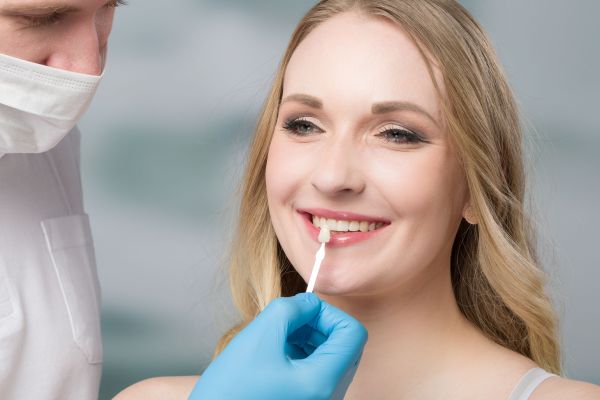
Thanks to tremendous advances, you have more options for dental veneers than ever before. Cosmetic dentistry as a whole has completely changed over the years. That means for a broad range of tooth and gum problems, you have incredible solutions. Yes, veneers improve smiles, but they also correct a host of issues.
What are dental veneers?
A great way to describe dental veneers is as a layer of material a dentist places over the surface of a tooth. Typically, these go on the front teeth as a way of improving aesthetics. However, this type of cosmetic dentistry accomplishes a lot more. For the most part, a laboratory makes veneers out of either porcelain or composite material. While both work great, each is different. Of the two, porcelain veneers look the most natural.
Types of dental veneers
Many people have no idea that dental veneers come in different types. When consulting with a dentist about this cosmetic dentistry procedure, they will provide information on all of them. However, the dental professional will recommend the most favorable choice based on each patient’s needs. Beyond the materials and even brands, a laboratory can make specific types of dental veneers.
Pressed ceramic
From a manufacturing standpoint, pressed dental veneers are the easiest to make. Also, compared to the other types, these are thicker. As a result, the veneers are somewhat stronger and more durable. However, as a dense option, a dentist must do more alterations to produce the overall structure of the tooth.
Stacked ceramic
For this cosmetic dentistry procedure, some people prefer the stacked ceramic option. These dental veneers, custom-made by hand, look and feel amazing. For someone who wants to dramatically improve their smile, this is a great way to go. Since a skilled ceramist performs the work, it is easy for them to match a person’s natural tooth color, translucency and shape.
Lithium disilicate
For someone who grinds their teeth at night, this particular material comes highly recommended. These dental veneers provide strength. For a dental lab to make them, they use either CAD or CAM technology. That gives the finished product incredible precision.
Zirconia-based
While similar to the lithium disilicate option, these dental veneers are even stronger. For that reason, these are a great choice for structurally weakened teeth. Since a lab makes these veneers using the same material as crowns, breaking them is difficult to do. The one drawback of both ceramic and porcelain veneers is these can chip and crack. These, on the other hand, are almost indestructible. Along with improved aesthetics, zirconia-based veneers work great at hiding surface imperfections.
Minimal-prep
For cosmetic dentistry, there is yet another type of dental veneers. Based on the extent of a patient’s concerns, these might be an option. As this type is much thinner compared to traditional veneers, a dentist does not need to remove as much tooth enamel. For individuals who prefer taking a conservative approach to cosmetic dentistry, minimal-prep make a good choice.
Making the right decision
With the help of a dentist who performs cosmetic dentistry procedures, you will end up with the right dental veneers. With so many types and top-of-the-line brands, you will be on your way to having the smile you always wanted.
Request an appointment here: http://www.drsarahlangston.com or call The Dental Wellness Group at (601) 533-4788 for an appointment in our Brandon office.
Check out what others are saying about our services on Yelp: Read our Yelp reviews.
Related Posts
A dental crown is meant to protect a weak or damaged tooth, so it can feel frustrating if it starts to hurt. Minor sensitivity can be expected as the tooth adjusts to a new crown. However, pain that lasts, gets worse, or starts months later may mean something needs attention.Here are three of the most…
Wearing clear braces can make daily brushing and flossing feel a little more complicated. Food can collect around brackets, attachments, or along the edges of clear aligners. Fortunately, with a simple routine, it is possible to keep teeth clean and gums healthy throughout treatment.Brushing is one of the most important parts of clear braces care.…
Tooth-colored fillings are considered a form of routine dental care, and they are safe and relatively non-invasive for patients. Learning more about the role tooth-colored fillings play in routine dental care can help you decide on treatment and calm any anxieties you may experience if you have an appointment scheduled for this procedure.Although the best…
Wondering what a dental onlay is? These restorations are used to address a number of issues with molar teeth. Similarly to dental crowns, onlays cover the cusps of molar teeth, which are responsible for eating and chewing. The cusps of teeth are prone to wear and tear, which is where dental onlays come into play.…